
John Squires, the director of the US Patent and Trademark Office (USPTO) has issued a decision denying institution of inter partes review (IPR) proceedings requested by Apple to challenge patents owned by WeCrevention, a subsidiary of a Taiwanese semiconductor developer.
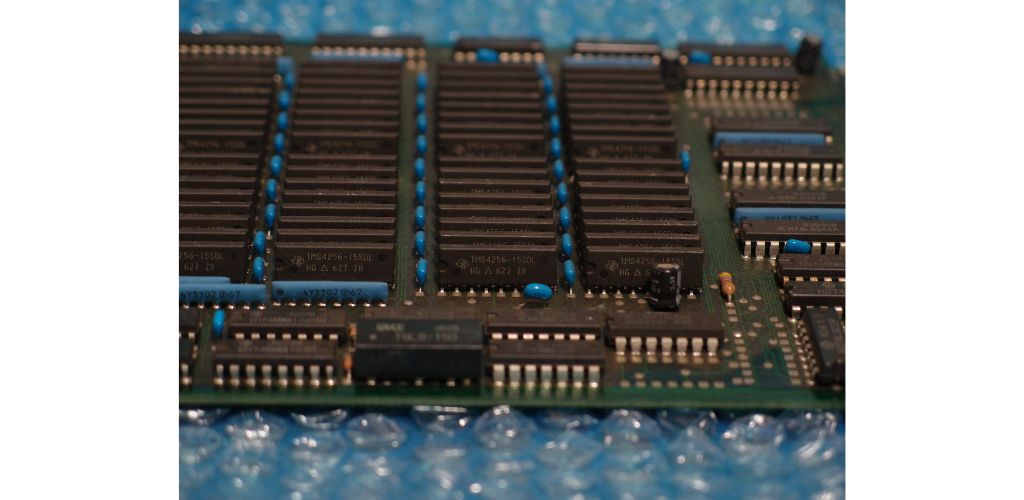
Last October, WeCrevention filed a patent infringement suit against Apple, alleging that all Apple products made since September 2019 that contain low power double data rate 5 (LPDDR) dynamic random-access memory (DRAM), including models of the iPhone, MacBook and iPad, infringed WeCrevention’s patents.
Apple responded by filing petitions for IPR proceedings challenging all five WeCrevention patents asserted in the case.
In one IPR petition, Apple argued that none of the patent claims required construing in order to determine their validity, and that the claim terms should be construed according to their plain and ordinary meaning.
In another IPR petition, Apple stated that it hadn’t conceded the that preamble language “high speed memory chip module” in one of the WeCrevention patents was limiting on the patent’s claim.
However, Director Squires noted that Apple had made conflicting arguments in the pending litigation, and failed “to adequately explain its different positions here before the Board and those it propounds in district court.”
“As I have indicated previously,” wrote Squires, “petitioners should be presenting a single construction and applying that construction consistently.”
“Failure to do so, without adequate explanation,” he said, “is problematic and raises concerns of strategic litigation behavior spill-over into the [Patent Trial and Appeal Board (PTAB)] inconsistent with Congress’s intent to provide a quick and cost-effective alternative to district court litigation” – i.e., the IPR process.
As Reuters reported, Squires had previously said that “the mere existence of co-pending litigation in and of itself may not necessarily raise concerns.”
However, he also said that
all too often the co-pending litigation involves either the same arguments as the [IPR], or a petitioner asserts system art in the litigation that overlaps with the patents or printed publications asserted in the [IPR] — a tell-tale sign that the [IPR] is not functioning as a litigation alternative.
The IPR process was established in 2012 by the America Invents Act (AIA), which significantly overhauled the US patent system.
An inter partes review is used to challenge the patentability of one or more claims in a US patent only on a ground that could be raised under 35 U.S.C. §§ 102 (novelty) or 103 (non-obviousness), and only on the basis of prior art consisting of patents or printed publications.
The IPR procedure is conducted by the PTAB, which holds hearings without a jury.
Parties can appeal PTAB IPR decisions to the Federal Circuit.
As Squires noted, the IPR process is supposed to be faster and cheaper than district court litigation. Patent litigation that goes all the way to a jury – and perhaps farther on appeal – can cost the parties millions of dollars. An IPR generally costs “only” hundreds of thousands of dollars, or less.
As Ars Technica noted,
IPRs have dramatically lowered the costs of fighting patent-holding entities, and the Electronic Frontier Foundation was even able to mount an IPR to challenge a so-called “podcasting” patent with a simple online fundraiser that asked for $30,000 (but got far more).
IPR petitions dropped 66.3% from 2025 to 2026, reportedly deterred by procedural changes initiated by Squires and his predecessor.
Reuters noted that Squires “discretionarily denied IPR petitions if parallel litigation is scheduled to go to trial first or if the patent owner has developed “settled expectations” in the patent being challenged based on commercial activity or the age of the patent.”
Just like the haiku above, we like to keep our posts short and sweet. Hopefully, you found this bite-sized information helpful. If you would like more information, please do not hesitate to contact us here: https://aeonlaw.com/contact-us/.