
The US Supreme Court has been asked to grant certiorari to resolve a conflict among the circuit courts over whether the federal Defend Trade Secrets Act (DTSA) allows damages for unjust enrichment to be awarded even if there is no showing of actual loss to the plaintiff due to the defendant’s theft of trade secrets.
The DTSA was enacted in 2016 and created the first federal cause of action for trade-secret misappropriation. Trade secrets are also protected under state law.
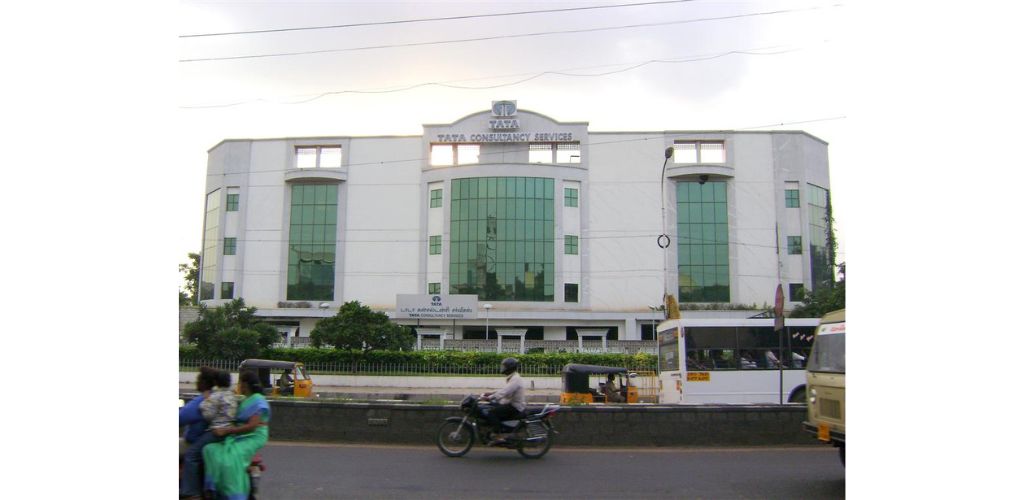
The petition for certiorari is in response to a Fifth Circuit decision in the case of Computer Sciences v. Tata Consultancy.
Computer Sciences alleged that Tata had used its trade secrets to win a $2.6 billion contract with Transamerica and to develop Tata’s own software platform.
As the petition describes it,
In the 1990s, respondent [Computer Sciences] licensed two software platforms to the insurance company Transamerica. … In 2016, Transamerica initiated a bid process to replace those platforms. … Petitioner [Tata] and respondent each submitted a bid. … Petitioner won the contract and began transitioning Transamerica from respondent’s legacy systems to petitioner’s own software platform, called BaNCS. … In the course of developing its bid, and then transitioning Transamerica to the new platform, petitioner received from Transamerica certain information about respondent’s software systems. … After losing the bid, respondent sued petitioner under the DTSA for trade-secret misappropriation in federal court.
According to Tata:
Respondent argued that petitioner had accessed respondent’s confidential information in putting together its bid, developing a Transamerica-specific “customer layer” of BaNCS, and migrating Transamerica’s data to the new platform. … Petitioner maintained that Transamerica had authorized it to use respondent’s information in the manner that it did and that respondent had contractually authorized Transamerica to do so.
The circuit court affirmed a $56 million unjust enrichment award and a $112 million punitive damages award in favor of Computer Sciences, calculated based on the costs Tata avoided via its trade secret theft rather than based on any actual loss to Computer Sciences.
In the Second Circuit case of Syntel Sterling Best Shores Mauritius Ltd. v. The TriZetto Group, in contrast, the court acknowledged that avoided costs could, in theory, be the basis for unjust enrichment damages in some circumstances. However, the court limited the circumstances under which that would be possible and rejected the claim for such damages in the case at hand.
Under the DTSA, damages are to be based on the “actual loss caused by the misappropriation of the trade secret” and on “any unjust enrichment caused by the misappropriation of the trade secret that is not addressed in computing damages for actual loss.”
Also under the DTSA,
in lieu of damages measured by any other methods, the damages caused by the misappropriation measured by imposition of liability for a reasonable royalty for the misappropriator’s unauthorized disclosure or use of the trade secret;…
The DTSA also provides that “if the trade secret is willfully and maliciously misappropriated,” a court may “award exemplary damages in an amount not more than 2 times the amount of the damages awarded” for actual loss and unjust enrichment or as a reasonable royalty.
In the Computer Sciences case, the questions presented to the Supreme Court are:
- Under the Defend Trade Secrets Act, 18 U.S.C. § 1836, can a plaintiff obtain a monetary award for unjust enrichment even if it suffered no harm beyond any actual loss from the defendant’s misappropriation of its trade secrets?
- Under State Farm Mutual Automobile Insurance Co. v. Campbell, 538 U.S. 408 (2003), can a ratio of punitive damages to compensatory damages in excess of 1:1 violate due process when compensatory damages are substantial?
Until the Supreme Court rules on the issue (assuming it accepts the petition), the circuit split has implications for plaintiffs in some trade secret cases deciding where to bring suit.
Just like the haiku above, we like to keep our posts short and sweet. Hopefully, you found this bite-sized information helpful. If you would like more information, please do not hesitate to contact us here: https://aeonlaw.com/contact-us/.